How to Use a Glut of British Strawberries: 10 Recipes and Storage Tips
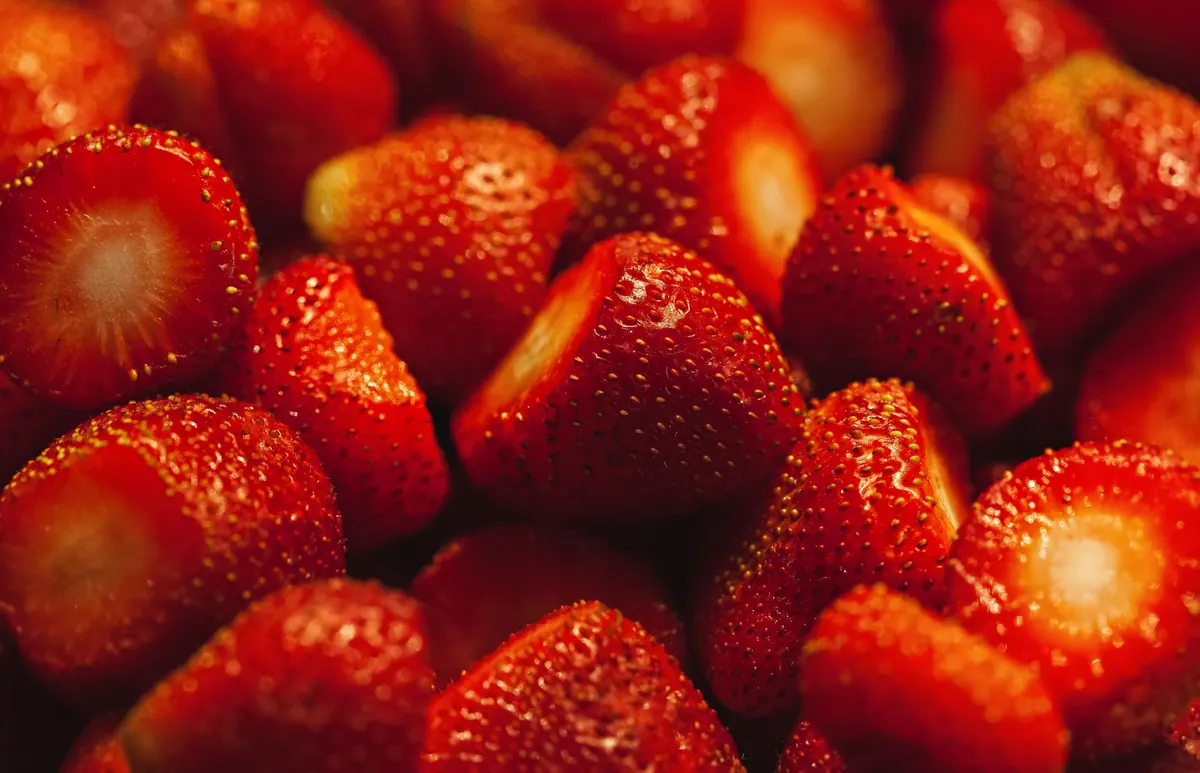
British strawberries arrive in a rush. For a few weeks from late May into July, the punnets at the market are fragrant, heavy and hard to walk past — and then, quite suddenly, you have three kilos in the fridge and a kitchen that smells of nothing else.
That's not a problem. It's an opportunity, as long as you deal with the fruit in the right order. Soft berries wait for nobody, so the aim is simple: eat the ripest today, chill the rest properly, and turn anything past its best into something that keeps.
Storage First: Keep Them Firm for Longer
Strawberries are delicate, and one mouldy berry can taint a whole punnet within a day. Sort them the moment you get home.
- Pick out the casualties. Any berry that's bruised, leaking or furry goes straight in the bin — not the compost caddy on the worktop, where it will sit and spoil the mood for the rest.
- Don't wash them yet. Water on the skin speeds up decay. Rinse only what you're about to eat, and pat dry.
- Layer, don't pile. Line a shallow container with kitchen paper, sit the berries in a single layer, then lay another sheet of paper on top. The paper absorbs both moisture and juice from any bruising.
- Fridge, but not the damp drawer. A shelf in the main body of the fridge is better than a salad drawer that collects condensation. Eat within two to three days.
- Warm them up before serving. Half an hour out of the fridge brings back the sweetness that cold suppresses — which is why a chilled strawberry can taste disappointingly flat.
Freezing: The Simplest Way to Buy Time
If you can't get through them, freeze them. Frozen strawberries lose their shape on thawing, so they're no good for eating raw, but they're excellent in smoothies, compotes, sauces and baking.
Whole or halved
Hull the berries, halve any large ones, and spread them on a tray lined with baking paper. Freeze for two hours, then tip into a bag or box. They stay loose, so you can scoop out a handful at a time. Frozen this way, they keep for around six months.
As a purée
Blitz hulled berries with a squeeze of lemon juice, then pour into ice cube trays or small tubs. Each cube is roughly one portion for a smoothie or a swirl through yoghurt. Lemon isn't essential but it keeps the colour brighter for longer.
Ten Recipes for a Strawberry Glut
These run from a two-minute bowl of fruit to a proper batch of jam. Start at the top if you're short on time.
Breakfast and quick puddings
- Macerated strawberries. Slice 500g of berries, toss with two tablespoons of caster sugar and a squeeze of lemon, and leave for twenty minutes. The syrup that forms is the whole point — spoon it over yoghurt, porridge, ice cream or sponge.
- Yoghurt pots. Layer macerated berries with thick Greek yoghurt and toasted oats in a jar. Made the night before, it's breakfast sorted before you've boiled the kettle.
- Eton mess. Crush a couple of meringue nests, fold through lightly whipped cream with macerated berries, and assemble at the last minute so the meringue keeps some crunch.
- Compote. Simmer 500g hulled berries with two tablespoons of sugar and a tablespoon of lemon juice for eight to ten minutes, until they collapse but still hold shape. It keeps for a week in the fridge and improves everything it touches.
Bakes and frozen things
- No-churn sorbet. Dissolve 100g sugar in 100ml water, cool, then blend with 500g berries and a squeeze of lemon. Freeze in a shallow tub, forking it through every thirty minutes for three hours.
- Quick strawberry tart. Lay ready-rolled puff pastry on a lined tray, score a border, spread the middle with a little cream cheese or frangipane, and top with halved berries. Bake at 200°C for about twenty minutes, then brush with warmed jam.
- Strawberry shortcakes. Split warm scones, fill with macerated berries and barely sweetened whipped cream. Slightly stale scones work fine here.
Savoury, sauces and jam
- Strawberry, feta and mint salad. Halve the berries, crumble over feta, add torn mint, olive oil, black pepper and a small splash of balsamic. Good alongside cold roast chicken, or piled onto toast.
- Strawberry lassi or milkshake. Blend berries with yoghurt and a little honey, or with cold milk and a scoop of ice cream. A pinch of salt sharpens the flavour of a very sweet punnet.
- Small-batch jam. Use roughly equal weights of hulled fruit and sugar with a tablespoon of lemon juice per kilo. Simmer, stirring, until it reaches setting point — around 104°C, or when a drop on a cold saucer wrinkles as you push it. That's about fifteen to twenty minutes for three jars. For a fridge jam, use less sugar, cook for ten minutes and keep it chilled, eating within three weeks.
Less-Than-Perfect Berries Have Their Uses
Soft, squishy berries are ideal for cooking, but be strict about mould: discard any berry showing fuzz, because the spores run through the fruit rather than sitting on the surface. Past that, almost anything goes. A handful of tired strawberries blitzed into a vinaigrette with olive oil and a little balsamic makes a sharp dressing for a summer salad. Simmered with sugar and strained, they become a coulis for pouring over cheesecake. And mixed with a splash of vinegar and left to steep for a fortnight, they make a fruity shrub to top up with soda.
If you're new to preserving, follow a tested recipe rather than improvising, sterilise your jars properly, and remember that sugar and acid are what keep jam safe rather than merely sweet.
Where to Start When the Fridge Is Full
Do the sorting first, because it takes five minutes and decides everything else. The ripest berries become macerated fruit for tonight; the firm ones go into the fridge in a paper-lined layer; the soft ones are frozen on a tray or cooked down into compote while the kettle boils. By the time you sit down, the glut has turned into a freezer drawer, a jar of jam and pudding.
And if there's still more than you can handle, give a punnet to a neighbour. British strawberries are worth more than the price of the punnet — they're the taste of a few short weeks. Passing some on is the best possible use of them.
Photo: Julia Filirovska / Pexels